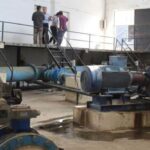
Syrian Deputy Minister of Energy for Water Resources Affairs, Osama Abu Zeid, met on Tuesday with delegations from the International Committee of the Red Cross (ICRC) and UNICEF to discuss strengthening cooperation in the water sector in Hasakah Governorate, northeastern Syria, with a focus on rehabilitating the vital Alouk water station.
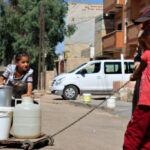
The Turkish state continues to cut off the water supply to Alouk Station in Hesekê. The Autonomous Administration, on the other hand, is making great efforts to provide water for the people.
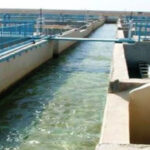
Millions of people do not have access to clean water after the invading Turkish state and its mercenaries cut off water from the Alouk Station, leading to epidemic diseases.
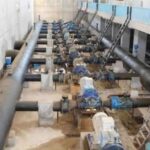
The General Directorate of Drinking Water of the Syrian government in Hasakah announced on Thursday that it is working to maintain Alouk station in the countryside of Sere Kaniye (Ras al-Ain) and put it into service as soon as possible.
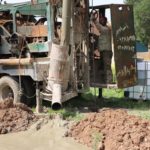
The Directorate of Water in Al-Hasakeh canton clarified that Hama project would be the alternative to the Alouk Station, and it would enter service after 29 days with a profusion of 13 cubic meters per hour.

The first Climate Justice Conference took place in Baghdad, Iraq, bringing together civil society organizations, activists, and affected individuals from across Iraq and neighbouring countries. Organisers said the conference “serve[d] as a platform for building common perspectives, exchanging experiences, and raising the most pressing issues in the field of climate justice through a series of dialogue and interactive sessions”.
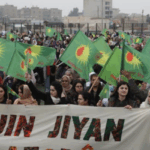
The hottest part of the year is not the ideal time to travel to Northeast Syria, a region whose local government is the Democratic Autonomous Administration of North and East Syria (DAANES). But I traveled there this past August, prepared for the soaring temperatures and the unrelenting sun. I spoke with a wide variety of officials and residents about the new realities in Syria. I also viewed with my own eyes the systems that people are living under, and the drumbeat of everyday life. After fifteen years of war, hostilities, and resource shortages, following decades of neglect by the regime of Bashar al-Assad, you would think that the region would be totally devastated.

At the 2nd Mesopotamia Water Forum held in Amed, participants developed proposals addressing the obstruction of access to water, ecological destruction, and the protection of water resources.
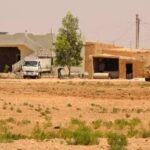
The water shortage in villages around Mount Kizwan negatively affects women. Despite the water shortage, women find ways to make their villages green.

A representative from the Water for Rojava Committee participated in World Water Week, a prominent global event focused on water issues, held in Stockholm from 25-29 August 2024.
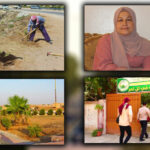
“Green spaces play an effective and positive role in climate change. Our aim is to create a clean and healthy environment,” said Meha Mihemed, Co-chair of the Ecology Department of the People’s Municipality in Til Temir.

HASAKAH, Syria (North Press) – A director of a private water desalination station in Hasakah Governorate in northeastern Syria said on Wednesday that an urgent need for potable water prompted him to start the project a week ago. The station’s primary mission is to desalinate and purify water, which is then stored in tanks and